
In today’s issue:
TypeSafe launches Jev
Salesforce releases Koa
Claude Code ships Projects
Anthropic publishes AI R&D metrics
Periodic Labs releases Neon
Gemini 3.8 Live launches
Devin adds codebase-wide Code Scans
HarnessTax measures the harness cost
Claude Code reads AGENTS.md
Cowork merges into Claude
And all the top AI dev news, papers, and tools.
Top Stories
Jev and System One Models
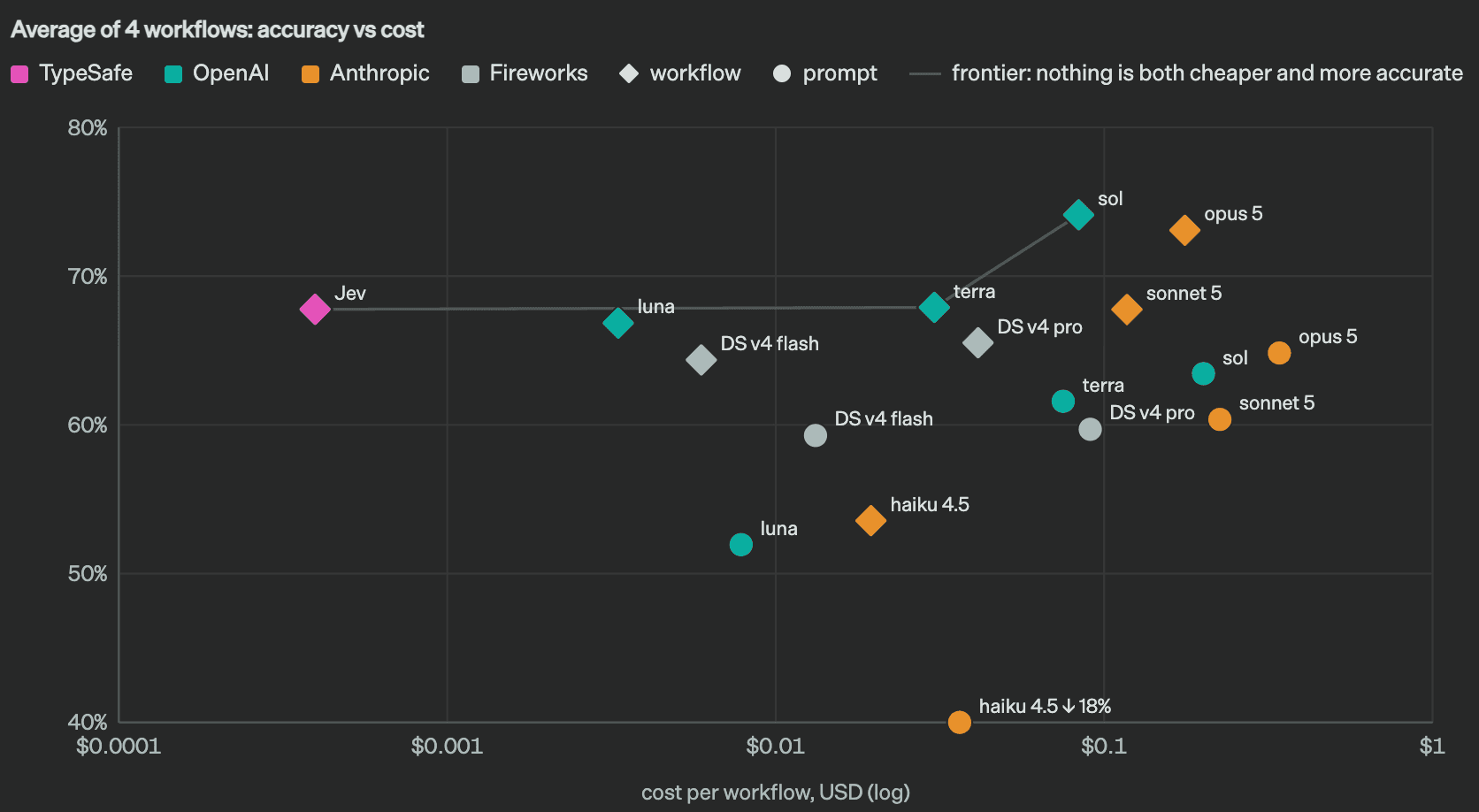
TypeSafe AI came out of stealth with Jev, a model built for the small decisions software makes millions of times a day, not for chat. Founder Diogo Almeida worked on the instruction-following methods behind ChatGPT at OpenAI.
Typed decisions, not text: Jev takes your app state plus a typed question and returns a decision with a calibrated probability attached. You never write a JSON prompt, add a parsing layer, or validate the output.
Three question shapes: A boolean question returns a probability, a choice question picks one option from a set you define, and a score question returns a number on your scale. You can run several questions about the same input in one call.
Speed and price: Answers come back in 70 to 500 ms end-to-end at $0.042 per million input tokens, with output tokens free. TypeSafe reports up to 190x faster and 440x cheaper than frontier LLMs on its published workflows.
Error rates: Jev records 0% structured output errors and 0% tool call errors on TypeSafe’s suite, against 5.73% and 0.67% for Opus 5.
Training method: The model uses a new architecture, a parallel sampler, and a training method TypeSafe calls Reinforcement Learning for Calibrated Decisions.
Salesforce Koa
Salesforce released Koa, a 120B enterprise model post-trained from NVIDIA’s open-weight Nemotron-3-Super-120B with GRPO, aimed at multi-turn tool use in CRM workflows.
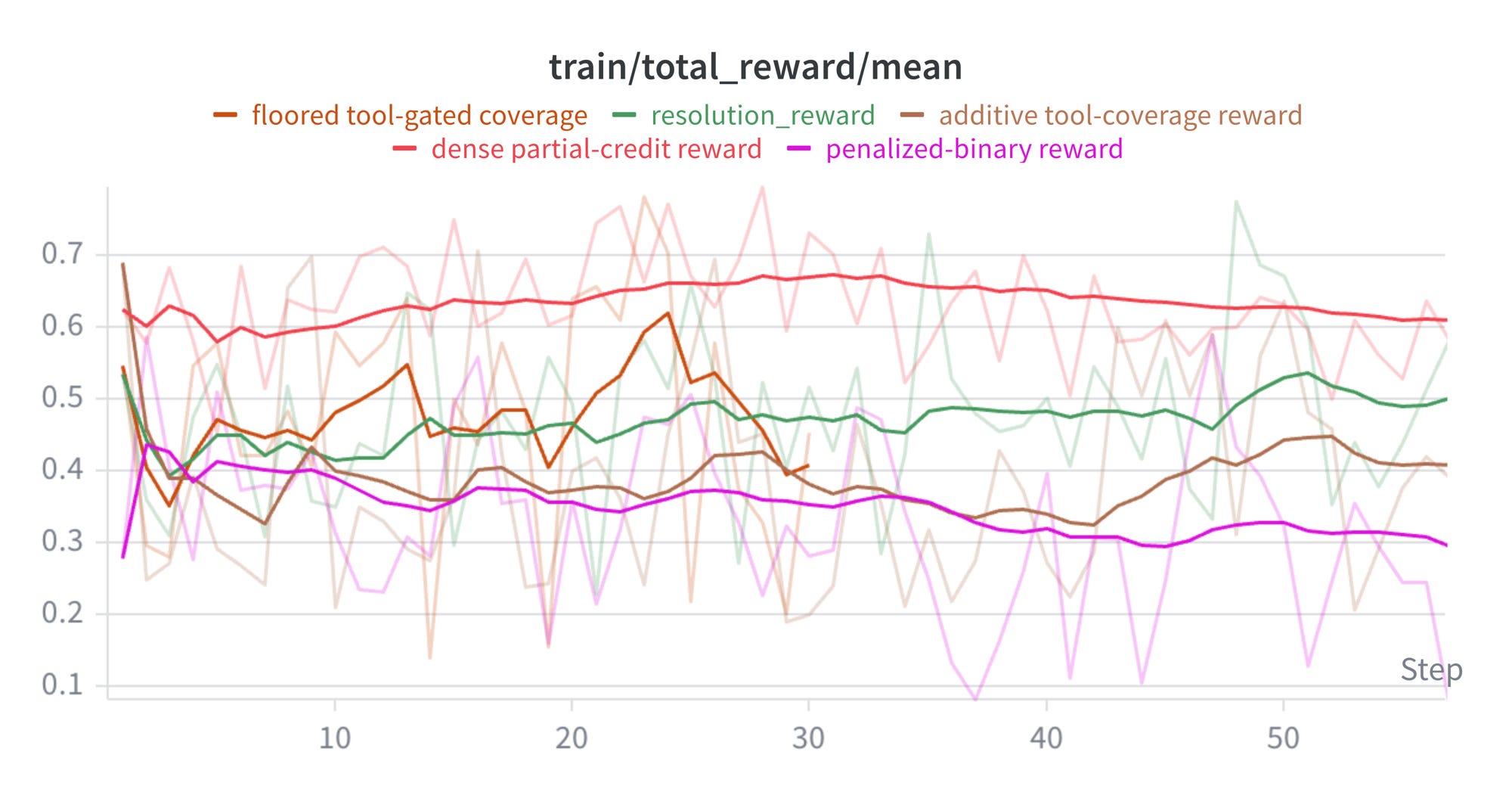
Specification-driven RL: A simulation-to-reward pipeline expands workflow specifications into persona-conditioned multi-turn tasks, with task-resolution rewards grounded in successful tool use for data-dependent requests. Enterprise specifications are written in Agent Script, Salesforce’s declarative language for building Agentforce agents, and public tool-use specifications are synthesized directly.
Tool-use results: 66.63% on BFCL against 64.73% for the Nemotron base and 53.96% for GPT-4.1. On Tau2Bench, it reaches a task-weighted 69.41 against 68.64 for the base and 54.48 for GPT-4.1, still behind Opus 4.8 at 74.00 and GPT-5.5 at 83.99.
CRM Bench: 0.86 overall against 0.84 for the base and 0.81 for GPT-4.1, just under Opus 4.8 at 0.87. Function-call accuracy rises from 0.71 to 0.77.
No customer data: Training uses only public and synthetically generated data, built from nearly 27 years of Salesforce CRM deployment knowledge. Salesforce reports three times fewer errors than leading models on CRM actions in its own benchmark.
Availability: In pilot with selected customers now, with general availability in Agentforce set for winter 2026 in U.S. regions.